
Our fathers

When I was growing up in Damascus, Syria we were rich in fathers. My father was alive, suntanned and beautiful. He drove a fast car and wrote plays for me and my friends to act in, wrote me letters from the next room, and the sound of his laughter - for all the tragedies and losses he had faced, exile from his beloved Pakistan - was the happiest sound I'd ever heard.
My first friend ever, made in Kindergarten, was a boy called Ali. His father was an incredible cook and he would grill meat in the open air, his hands covered in parsley that he had been chopping. He would mash garlic into yoghurt and make envelopes of meat, smothered in bright pink turnip pickles and tomatoes, dip it into the sauce and insist on feeding us himself, the sauce dripping down his hands.
My friend Omar’s father was the man in charge of the Sheraton Hotel. A king. They lived on the top floor of the hotel- every child’s dream - and we spent every single day of our summers at the pool where the water was ice cold and the stone tiles sizzled with the heat of Damascus’s dry sun. Thanks to Omar, the lifeguard made us a special potion to tan even darker than we already were - it was hydrogen peroxide, suntan oil and a third secret ingredient, chlorinated water we thought. Maybe he added salt to it. He wouldn’t say.
Susan’s father was a friend of Papa’s and they laughed and joked often. We spent long weekend lunches together and Susan and I got into plenty of trouble together - I only ever got into trouble with her, really. We did roadtrips to Zahle in Lebanon together where our fathers looked at state of the art technology like laserdiscs and we did a monthly grocery shop that both fathers relished.
And then there was Nora’s father. Amo Nashaat. What can I say about Uncle Nashaat? He kept chocolate covered almonds in the freezer that we were only supposed to eat sparingly but we ate plenty of. He never told us we’d had enough. He somehow managed to keep a supply of almond covered Haagen Dazs bars which we also helped deplete. When we were little he drove us to the pool and when we were teenagers he advocated for slightly later curfews for us. He always greeted me in Arabic and I always replied in English, too shy to do otherwise. All of us loved him so much. In our twenties I’d ask Nora about Nash, which is what we called him to each other, whenever we spoke.
How’s Nash?
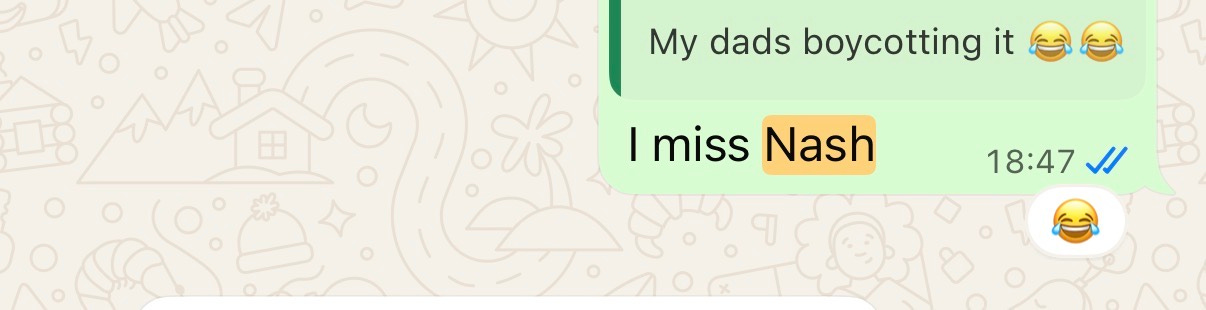
I miss Nash.
Where’s Nash?
In our thirties, Syria was torn apart by a war orchestrated by the US and Israel. As the people I grew up with left, I held onto the fact that Nash stayed. When he left too, it felt like my last tie to my childhood had been cut. As the war worsened and became uglier and uglier, he always seemed to see things clearly.
What does Nash think of…?
Is Nash worried?
What does Nash say will happen next?
People changed opinions, political and otherwise. But Nash was always consistent. In a time of rapidly changing fashions, you could always count on him to think from the ground. I relied on that. When I went on book tour to the US for New Kings of the World, Nash came to hear me speak in Pasadena. It felt like having family in the audience. I think he was proud of me. It felt like having a father there, an experience I never had as an author because Papa was killed when I was 14. I had tears in my eyes most of the talk. Nash did too, I think. We had dinner afterwards, Syrian food. He made sure they had Shawarma, my favourite.
Of all the fathers I grew up with, only two remain.
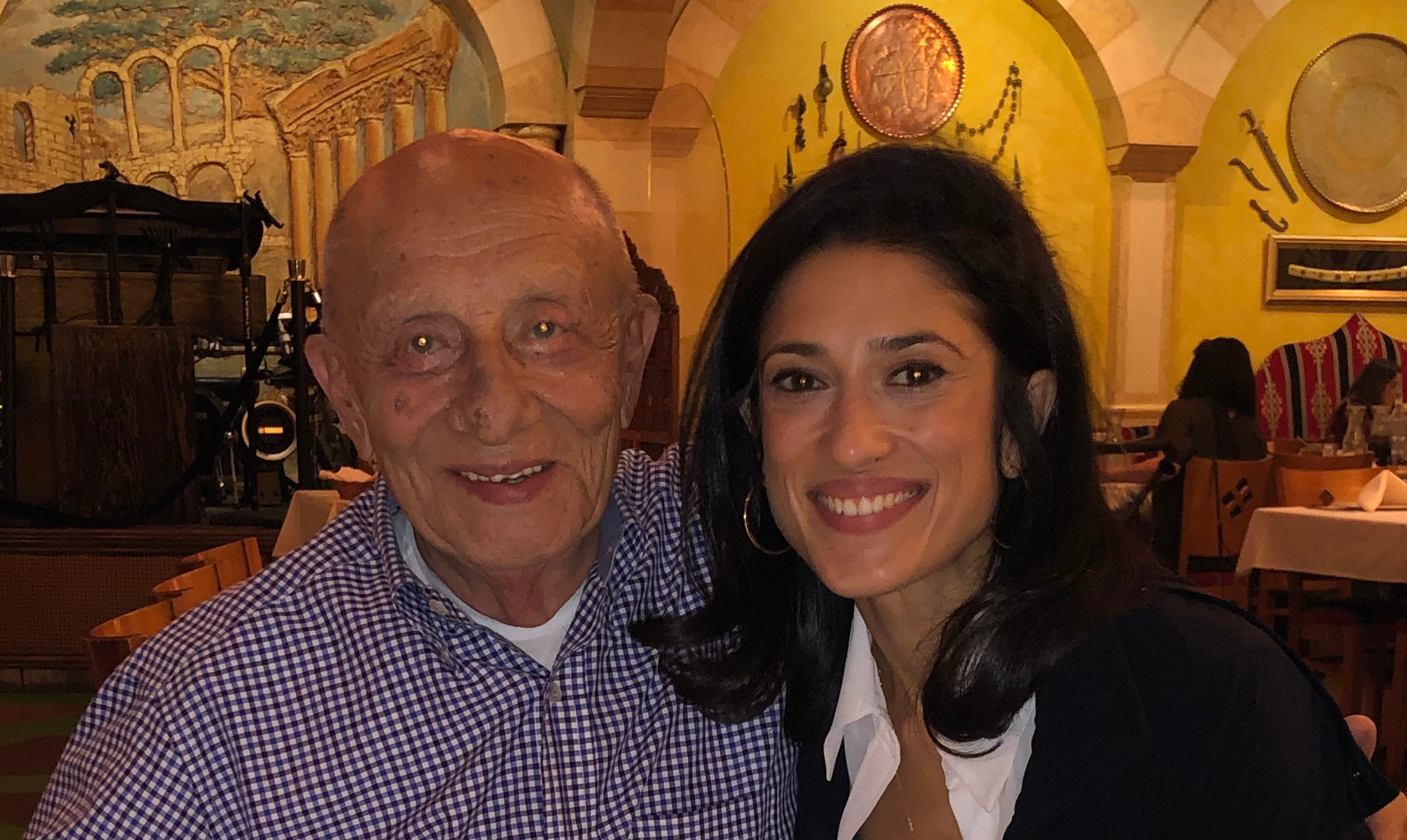
We lost Nash several nights ago. I don’t believe it still. He leaves behind so many of us who cherished him but in mourning him, I am thinking so much of childhood. Mine and others.
We are in our forties now and I can only imagine what a gift it is to have a parent live so long beside you, I am trying to remember and celebrate but it is impossible not to mourn, not just our fathers, but the past. It was so beautiful. The notion some of us grew up with - that we had unlimited time with our parents, siblings, and loved ones - has been irreparably shattered for children in Palestine.
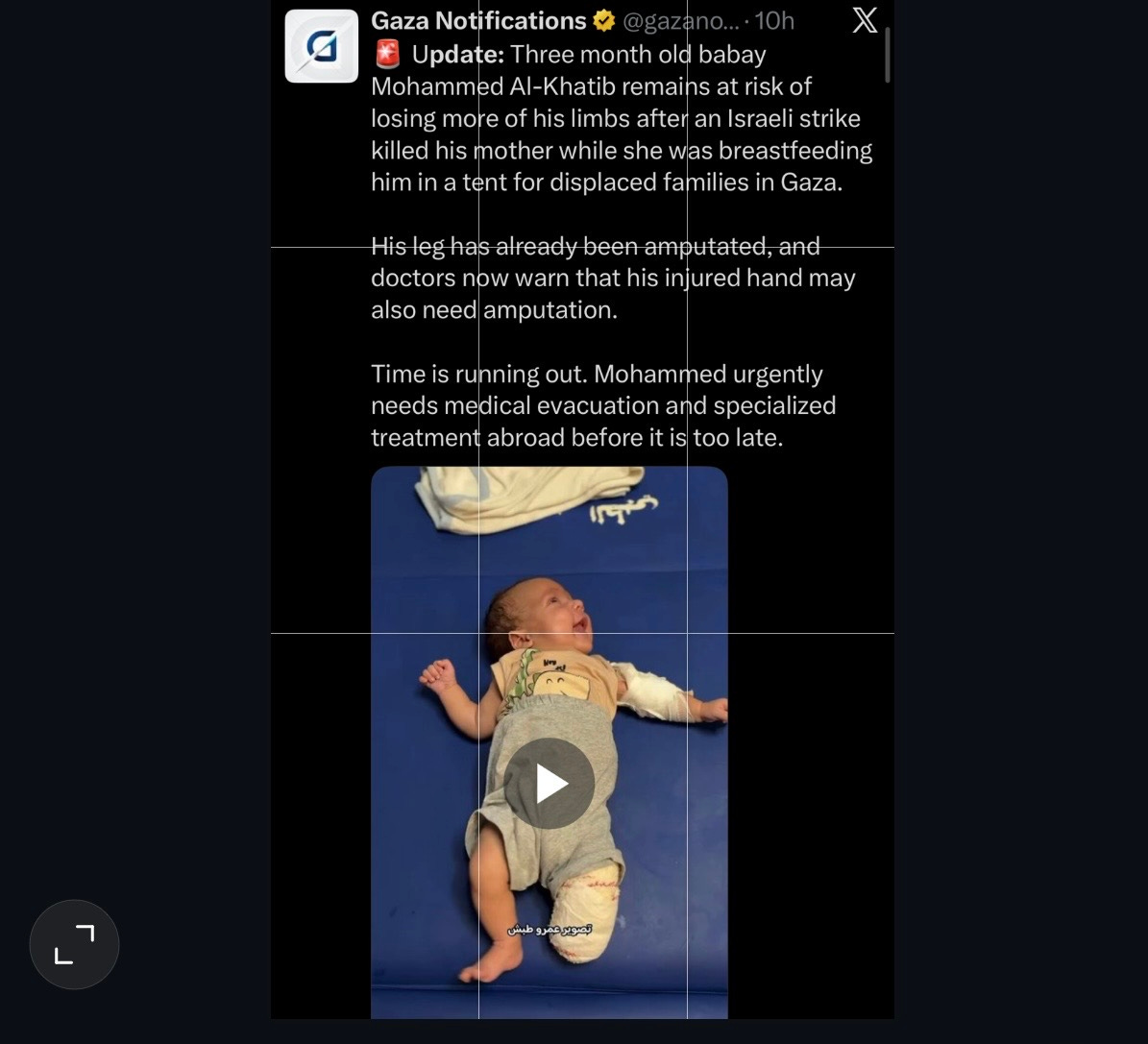
I found it hard not to cry yesterday when I saw a photo of Mohammed al Khatib, a three month old baby whose leg was amputated after Israel bombed his tent, murdering his mother as she breastfed him. Mohammad’s hand is badly injured by the Israeli strike and may also need amputation. Imagine that: A three month old baby with no assurance of time - time with his mother, time to be a baby, sheltered from pain and horror. Mohammad has none of that. He was born displaced, a month old when he was bombed by Israel, a month old when he lost his mother and his limbs. The depravity of Israel is limitless. Whatever evil you can conjure, they can and do surpass.
It is impossible to separate how we live from the world we live in. I thought of Nash so much the day that he passed and how lucky we were as children to have our fathers - even if it was short - to see them happy and free and occupied with the ordinary joys of life. How can you think of that and not think of all those children in Palestine and Lebanon who watched their fathers tortured and hunted down by those depraved savages of Israel.
I always think I’m going to write more about things like books or culture or things to take our minds off the horrors of the daily news, so far I haven’t managed. I’m sorry. I would like to, I need those distractions too. But for now I will stay in the past just a little longer. I miss Nash.
Dear madam,
„our fathers“ is a graceful piece of writing memory, entangled with today, heart crushing and forcing the reader to ruminate. A vivid image, jaunty.
„Our fathers“ is, inherently, encompassing the story of all our fathers, mine too.
Our fathers loved laughing and shadows, and books, and moon and … Before they got killed by the power.
My father Taher Badakhshi, disappeared in 1979, in a late summer afternoom, when they came to our house to take him.
A gaze, a sigh and …
Yours sincerely
Harun
PS
Sohrab Sepehri writes in his poem „the voice of water‘s footstep“ about our fathers
My father behind two migrations of swallows, behind two snowfalls, My father behind twice sleeping in the veranda, My father behind times has died. My father died when the sky was blue, My mother jumped from sleep unaware, my sister became beautiful.
My father died when the policemen were all poets. The grocer asked me, “How many melons do you want?” I asked him, “How much is a happy heart?”
My father used to paint. He used to make tars, played the tar too. He also had a nice handwriting.
Our garden stood on the side of the shadow of wisdom. Our garden was the interweaving place of feeling and plants, Our garden was the meeting point of a glance, a cage and a mirror . Our garden was perhaps, an arc of the green circle of happiness.
The unripe fruit of God on that day, I used to chew in sleep.
In original Persian
پدرم پشت دو بار آمدن چلچله ها ،
پشت دو برف، پدرم پشت دو خوابیدن در مهتابی ، پدرم پشت زمان ها مرده است. پدرم وقتی مرد. آسمان آبی بود، مادرم بی خبر از خواب پرید، خواهرم زیبا شد. پدرم وقتی مرد ، پاسبان ها همه شاعر بودند. مرد بقال از من پرسید : چند من خربزه می خواهی ؟
من از او پرسیدم : دل خوش سیری چند؟
پدرم نقاشی می كرد. تار هم می ساخت، تار هم می زد. خط خوبی هم داشت.
باغ ما در طرف سایه دانایی بود. باغ ما جای گره خوردن احساس و گیاه، باغ ما نقطه برخورد نگاه و قفس و آینه بود. باغ ما شاید ، قوسی از دایره سبز سعادت بود.
ميوه كال خدا را آن روز ، مي جويدم در خواب.
Fatima, this is a beautiful tribute. I love the framing of "the fathers" – and how you've gathered everyone you've encountered into that fold. That's rare. Most people wouldn't use that term so broadly, let alone apply it to themselves. But you did, and that reflects something deeper: that we are all part of one family and one story.
Those you gathered into the fold are not just remembered but carried forward in how you see the world. United, not separated – and much needed.